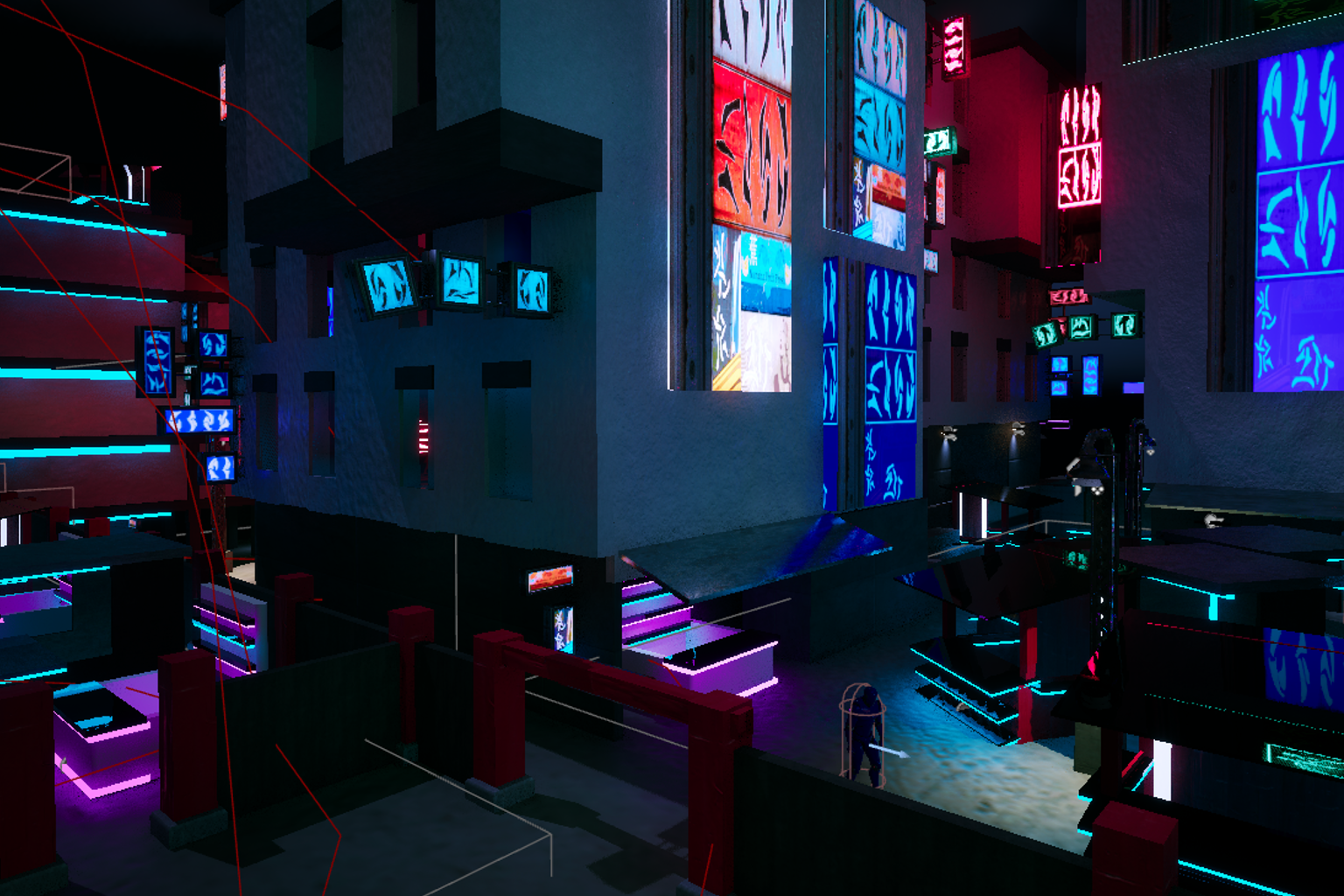
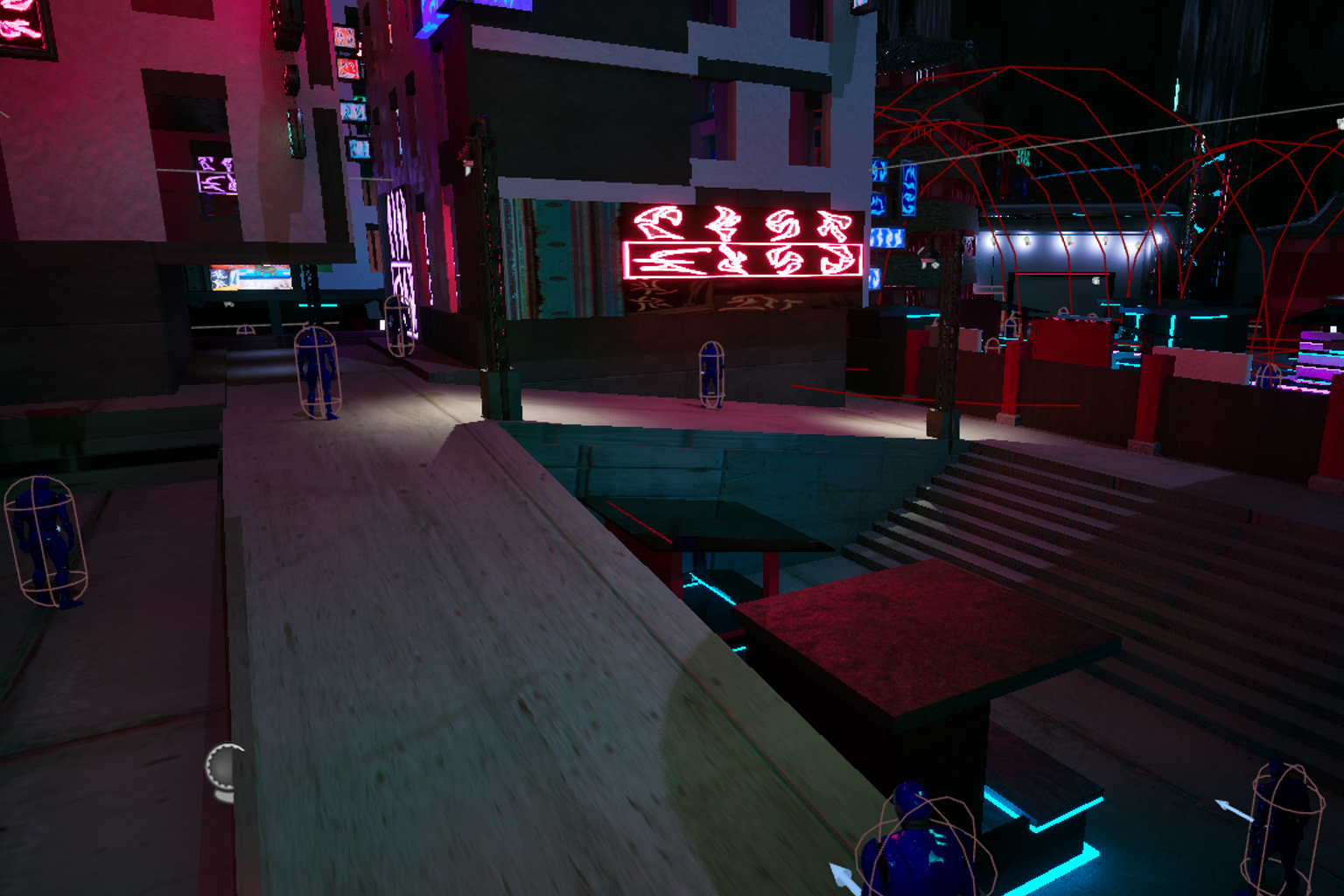
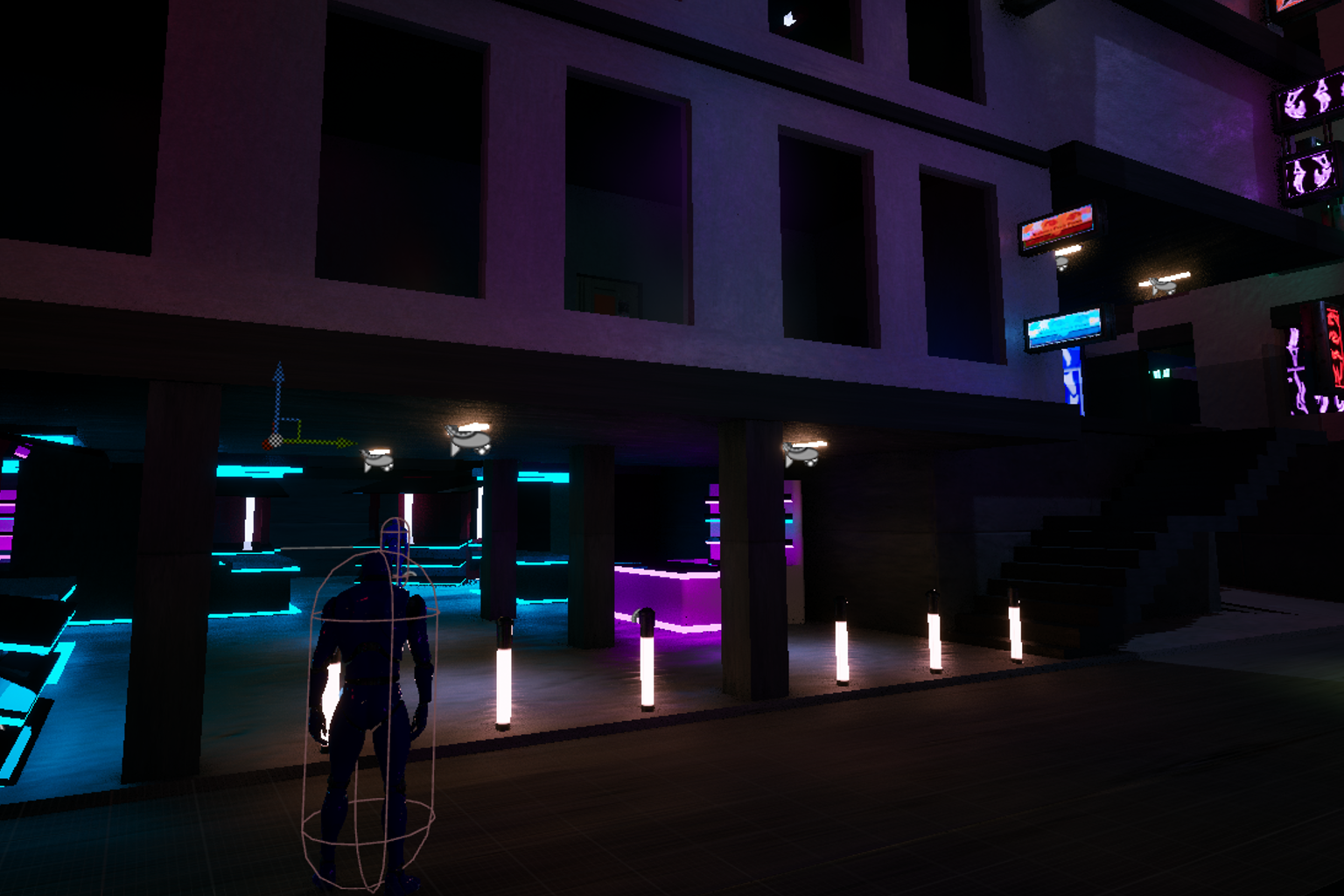
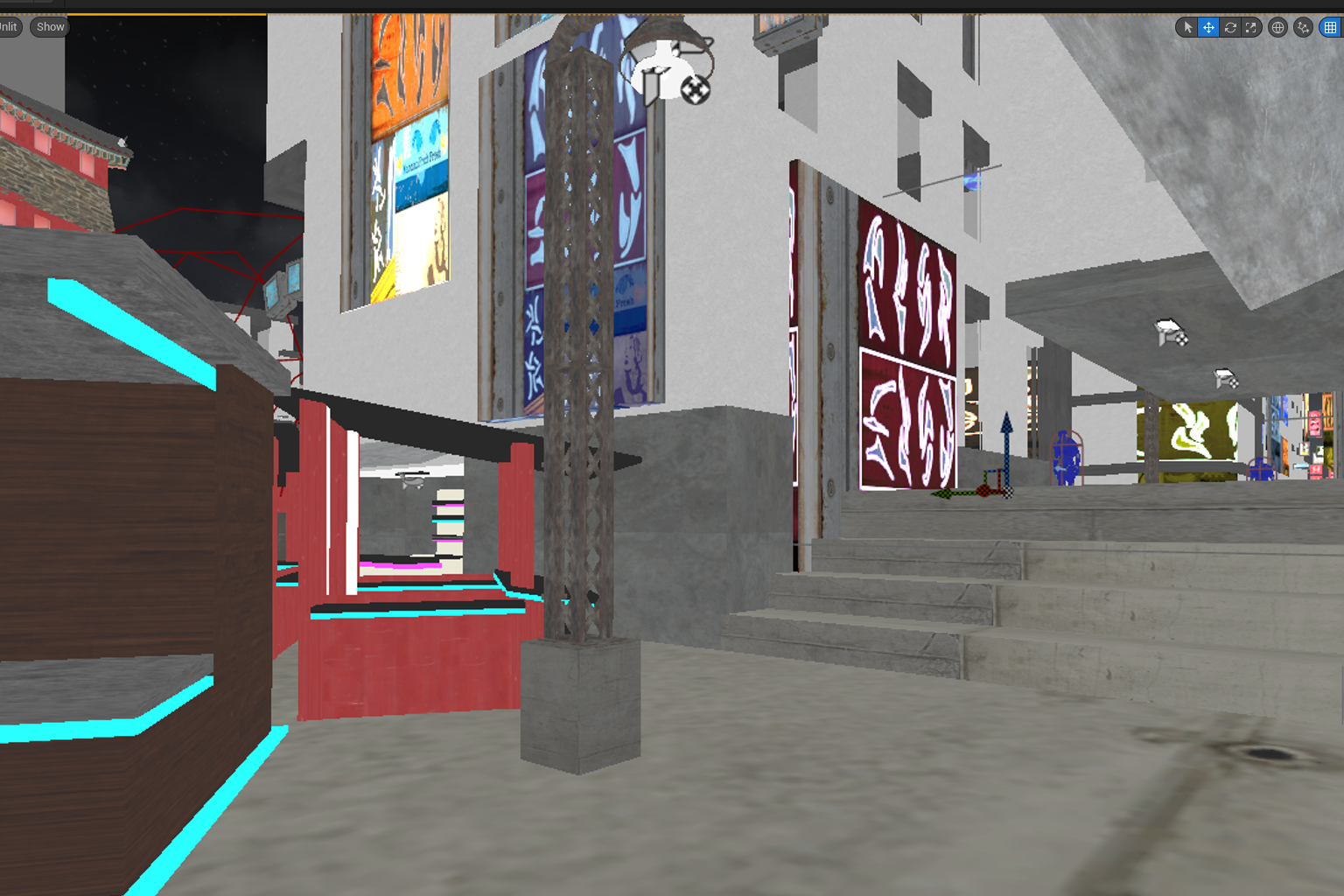
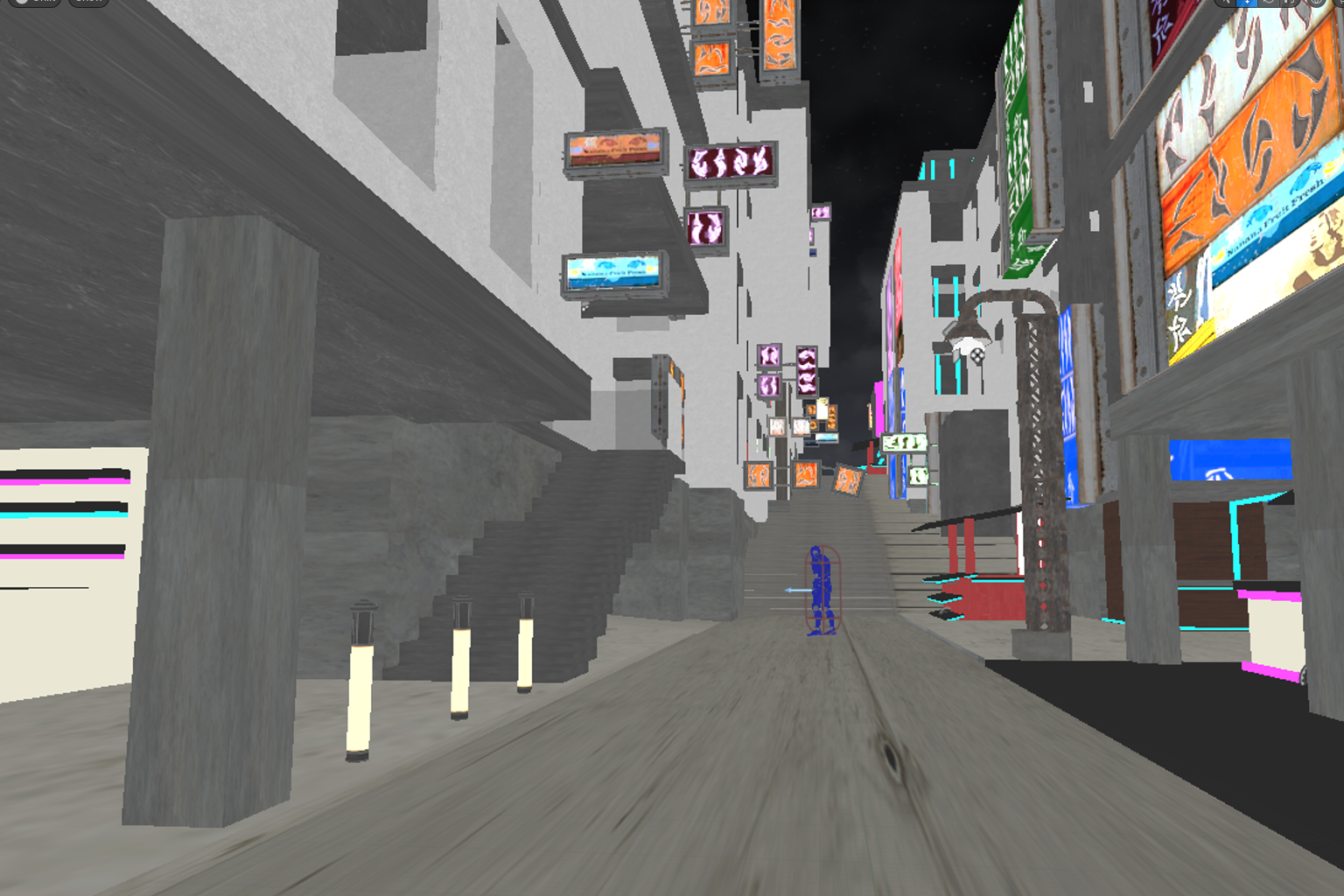
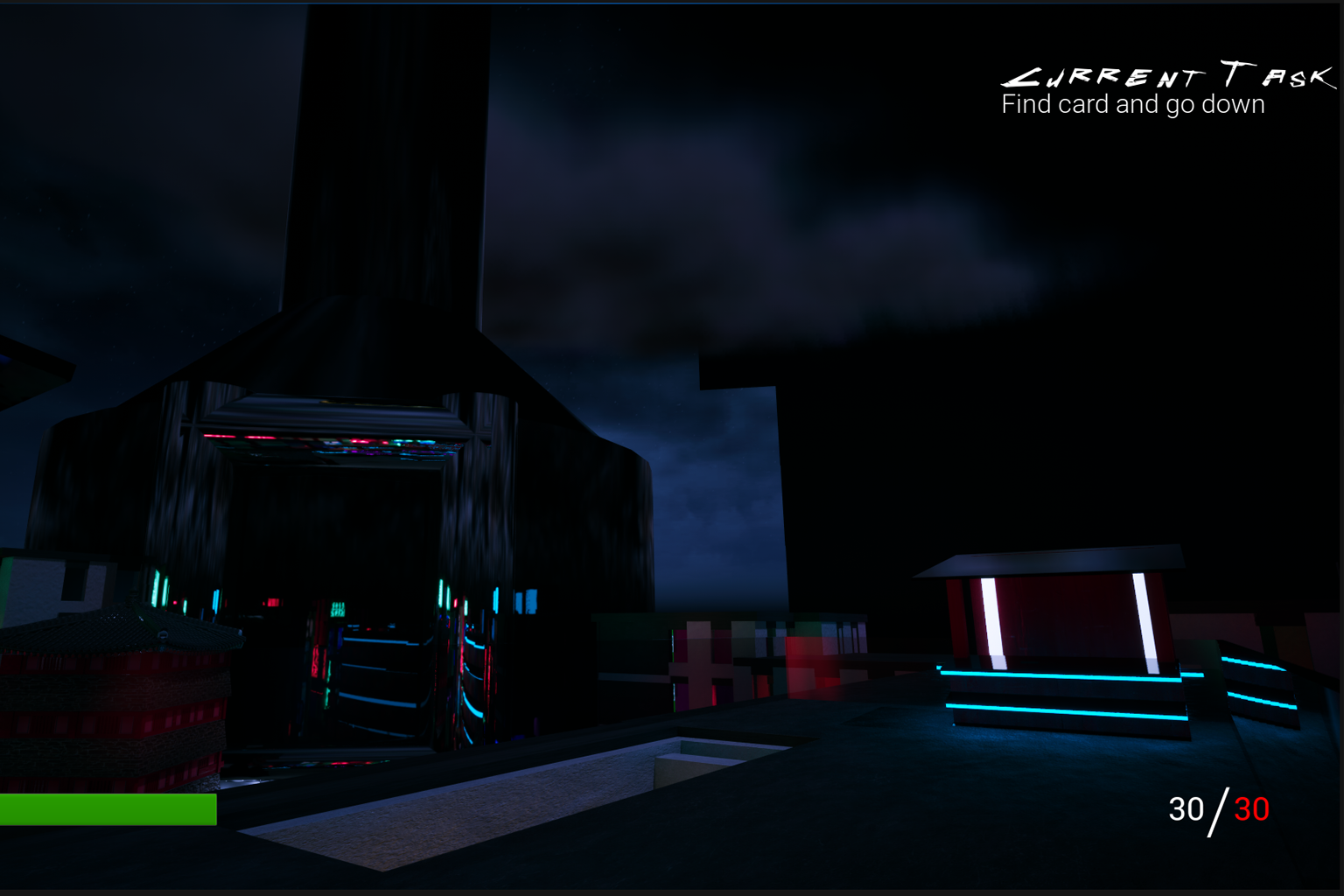
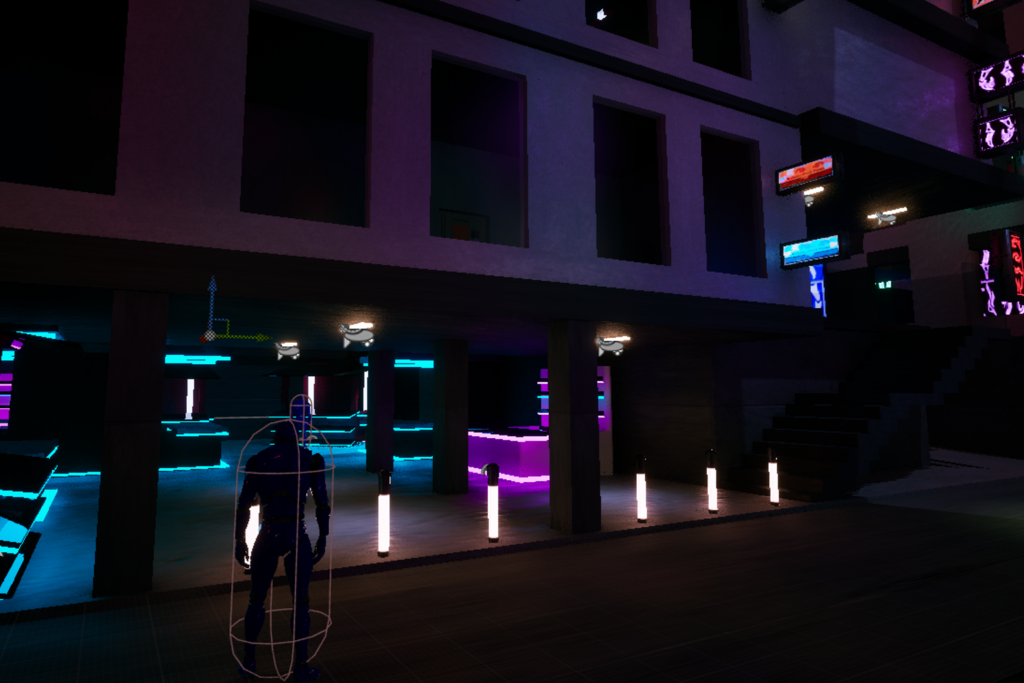
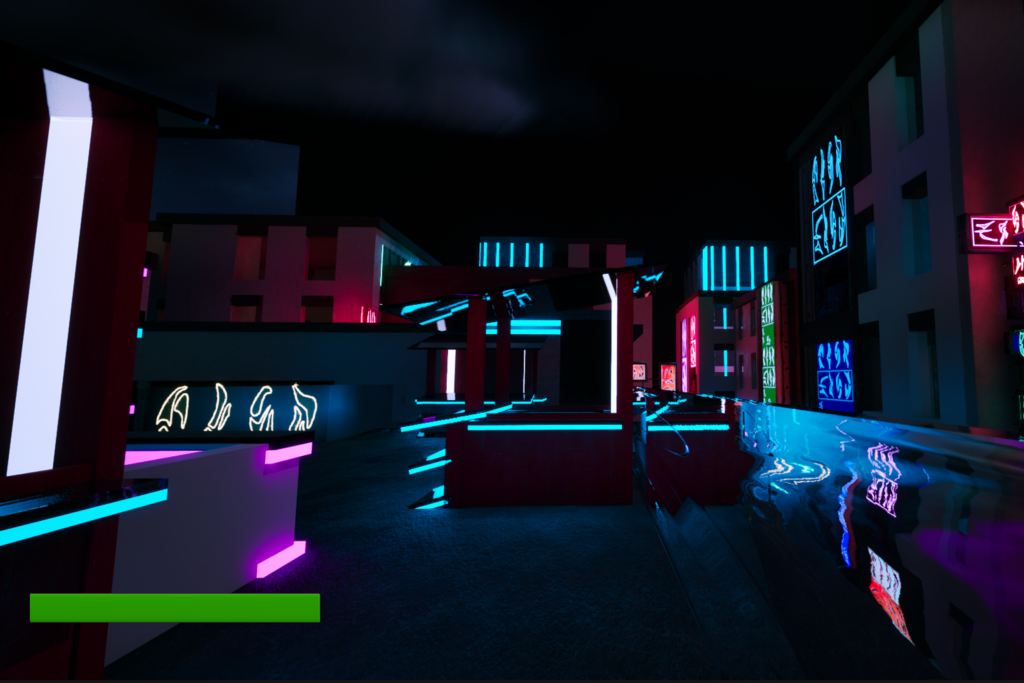
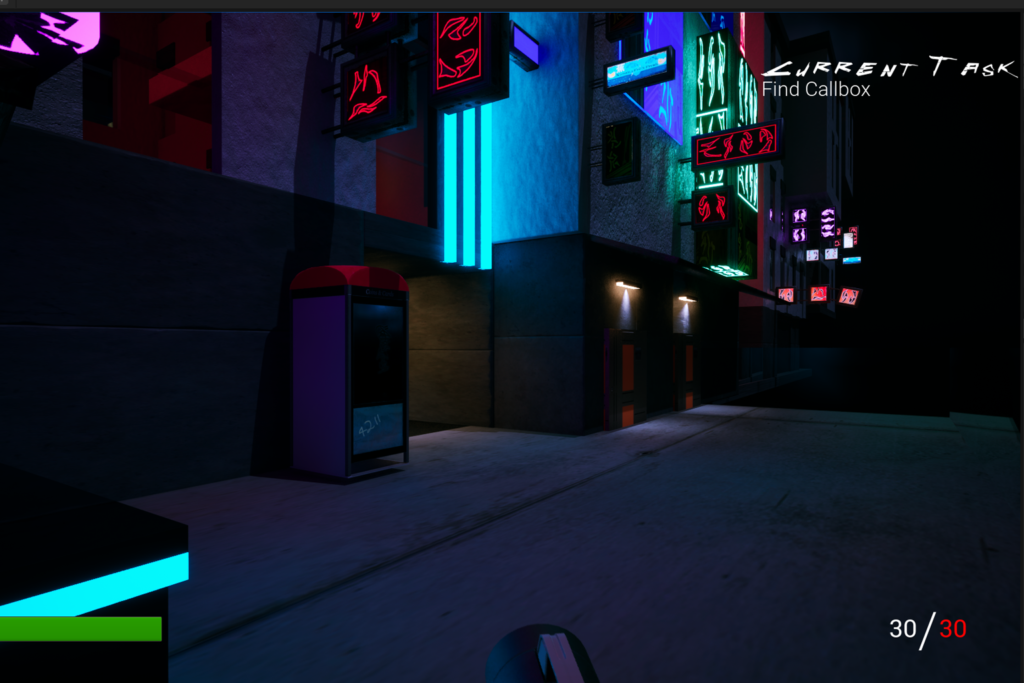
This project involved designing a mid-game level for a cyberpunk-themed game, where the player is already familiar with core mechanics.
The level combines open-world exploration with structured gameplay spaces, guiding the player through a dense urban environment toward a key objective.
My Role
– Designed the overall layout across three connected areas – Planned the main quest structure and player progression – Created the city map as an open-world exploration space – Designed initial quest objectives and player entry flow
Design Goals
– Create a readable and navigable cyberpunk city layout – Support both exploration and structured gameplay – Emphasize verticality and multi-layered movement – Guide the player toward a clear long-term objective
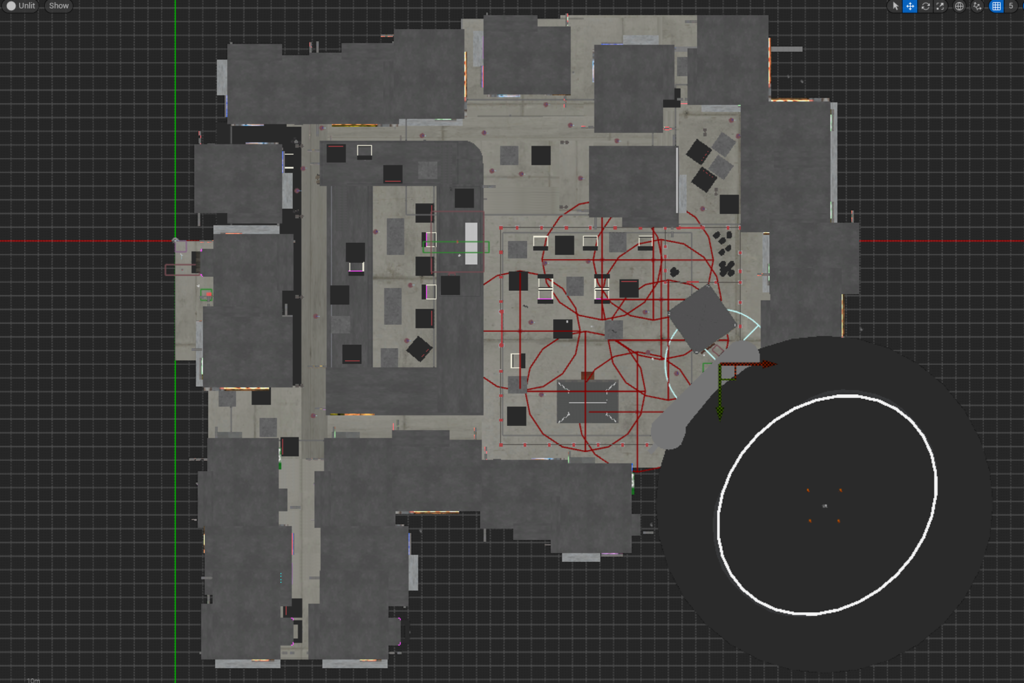
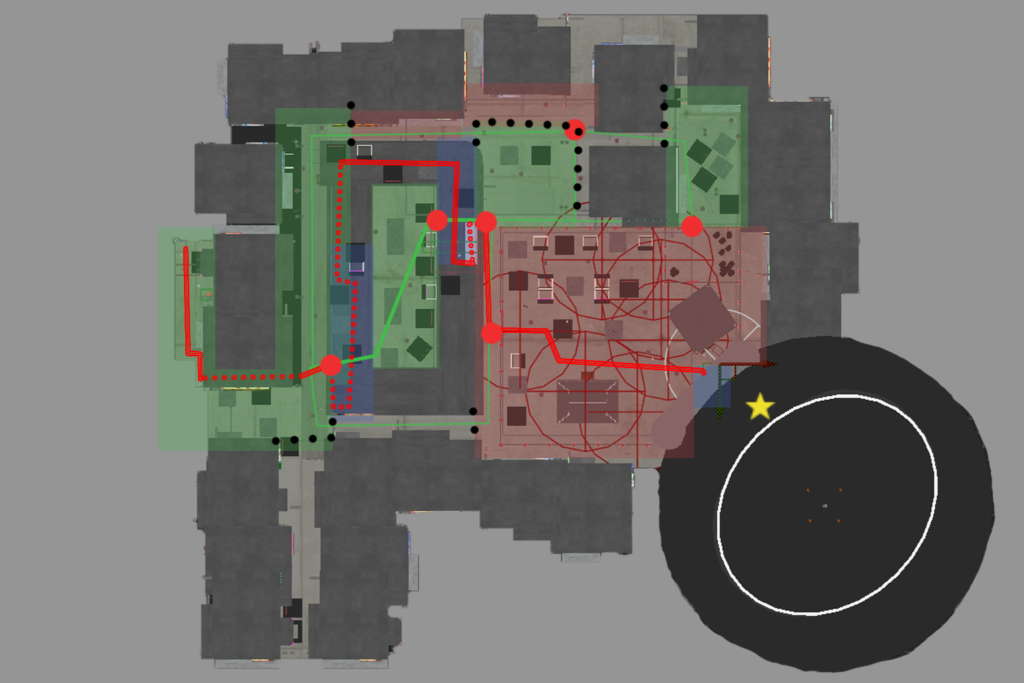
Top-down layout showing main and secondary paths, key nodes, district divisions and the primary landmark guiding player progression.
Level Layout & Player Flow
The city layout was designed to balance player freedom with clear navigation through a complex, multi-layered environment.
The map highlights key structural and gameplay elements:
– Main Path (red line) – primary route guiding the player through the level toward the final objective – Secondary Paths (green lines) – optional routes supporting exploration and alternative approaches – Nodes (red circles) – key decision points and transitions between areas – Districts (black dotted lines) – clearly defined zones separating exploration, combat and transition spaces – Landmark (yellow star) – the tower, serving as the main objective and visual anchor
Spatial Structure
The level is divided into distinct districts, each supporting a different type of gameplay:
– Exploration District (green areas) – open spaces designed for navigation and discovery – Combat District (red area) – enclosed zone focused on encounters and controlled gameplay – Transition Zones – spaces connecting different districts and guiding player progression
Districts are defined using spatial boundaries and marked on the map with dotted lines to reinforce readability.
Flow Design
Player movement is structured to provide a balance between exploration and direction.
– The main path leads the player through key narrative and gameplay moments – Secondary paths allow for exploration and different navigation choices – Nodes act as natural points of decision, helping guide the player without explicit markers – District transitions shift the experience from open exploration to more controlled gameplay spaces
This structure maintains clarity while supporting a non-linear experience.
Player Experience
Player Experience
The player moves from open exploration toward increasingly focused gameplay spaces.
– Exploration → open city with multiple choices – Transition → guided movement toward key locations – Encounter → controlled combat space in the den – Objective → tower as the final goal
This structure creates a balance between freedom and direction.
Process
– Research and reference gathering for cyberpunk environments – Layout design based on urban planning principles – Iteration on player flow and navigation – Refinement of level structure to balance exploration and gameplay
Key Takeaways
– Strong layout improves player navigation in complex environments – Verticality adds depth but requires clear structure – Landmarks are essential for long-term player orientation