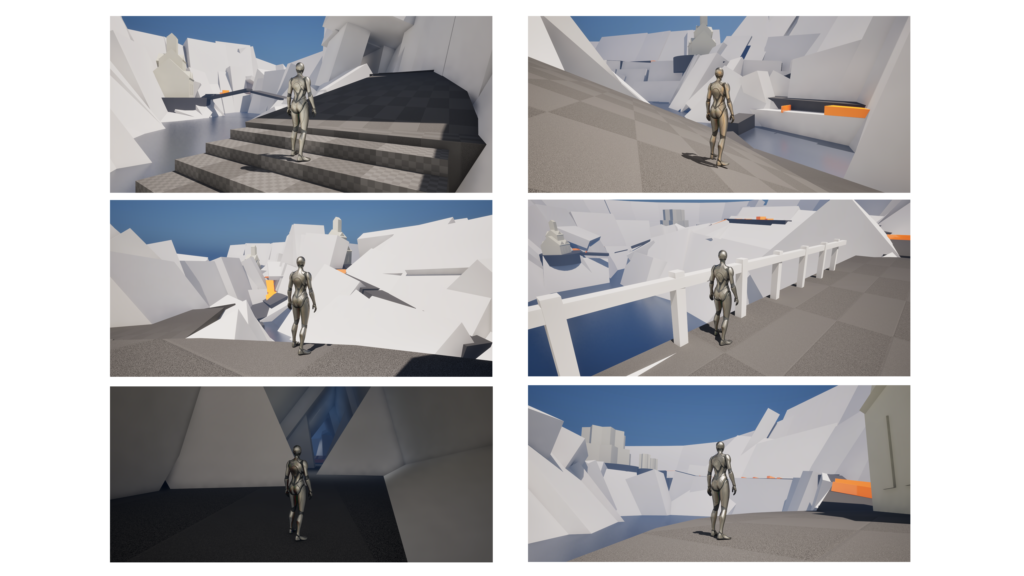
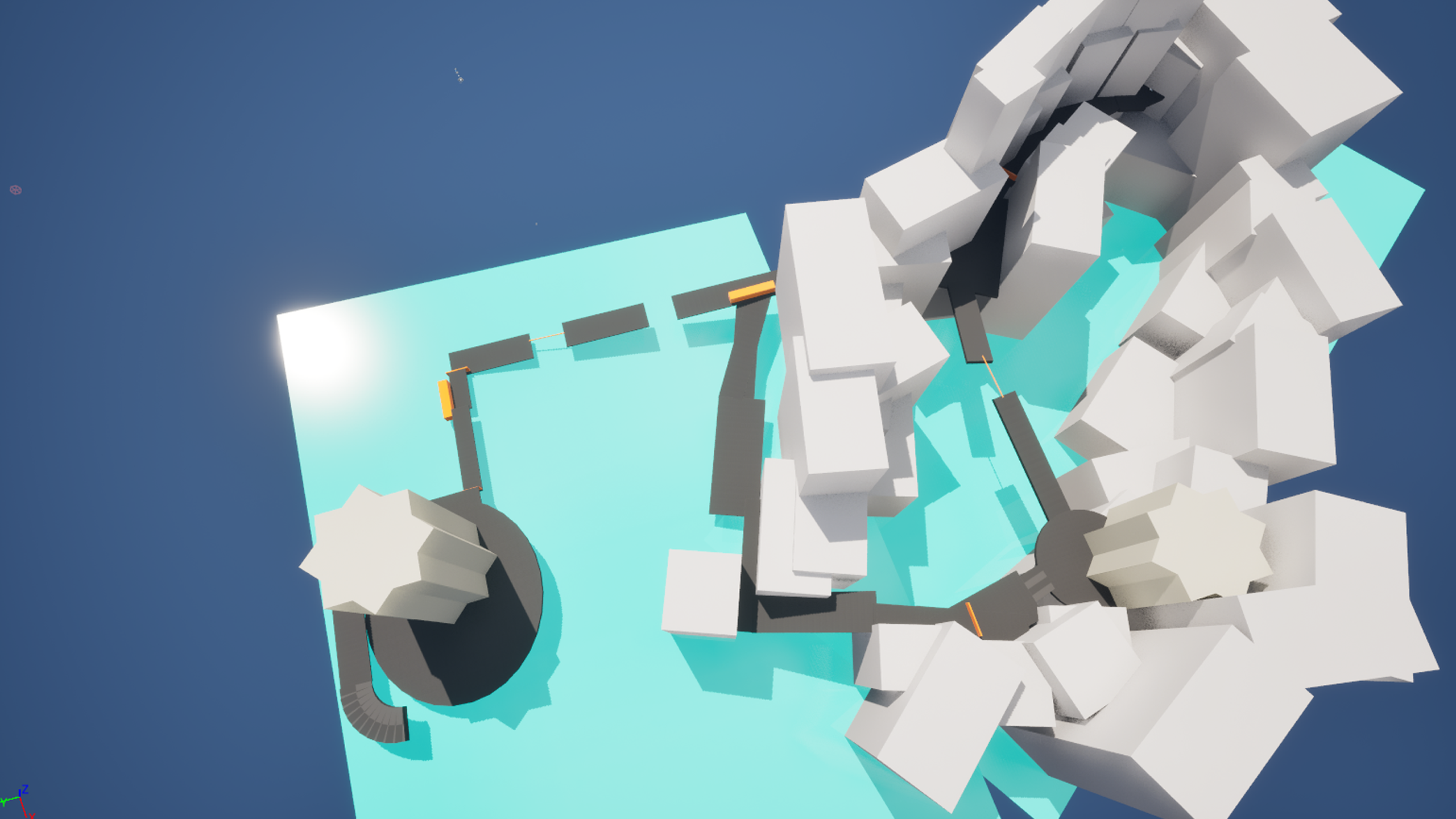
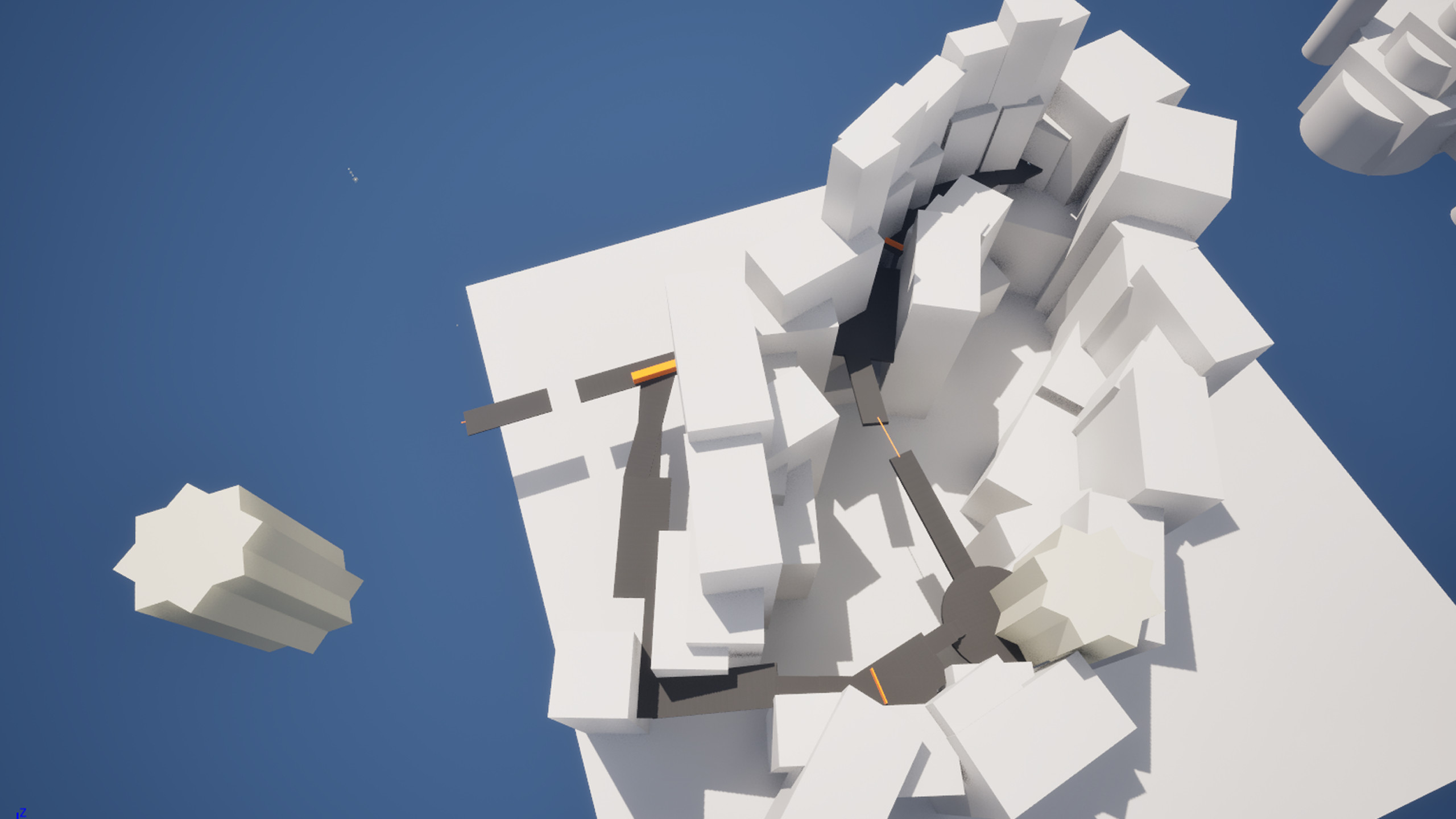
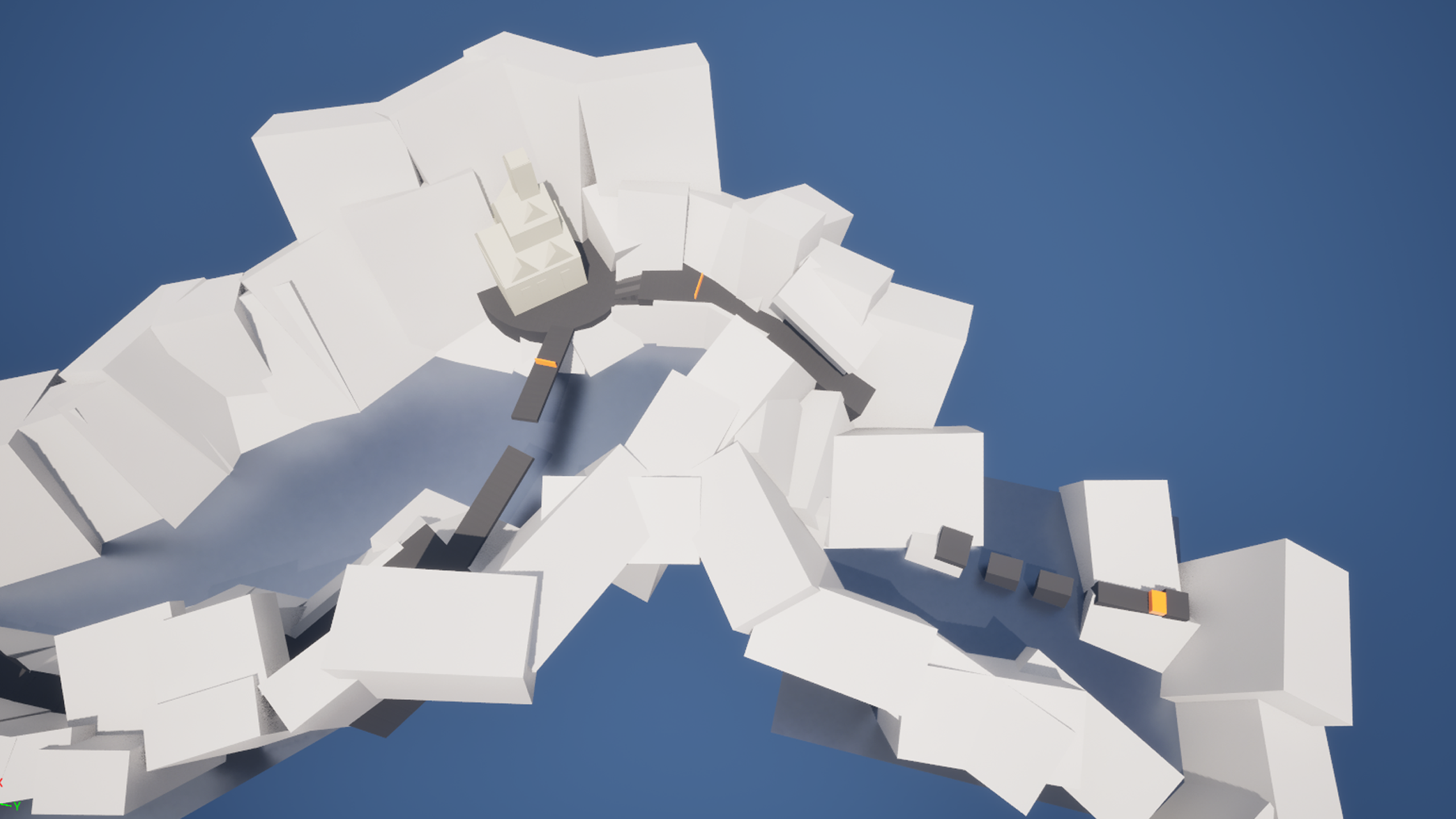
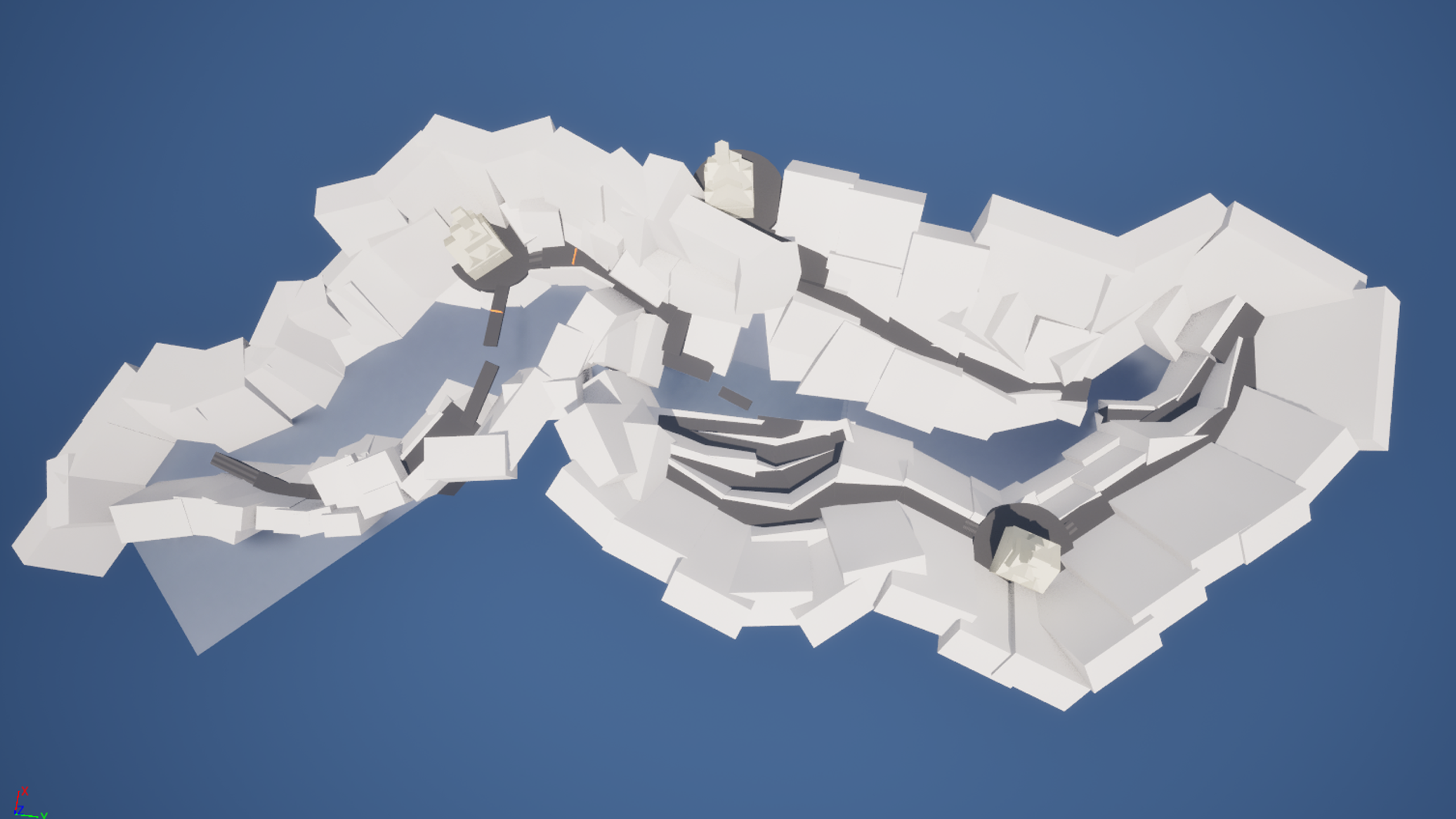
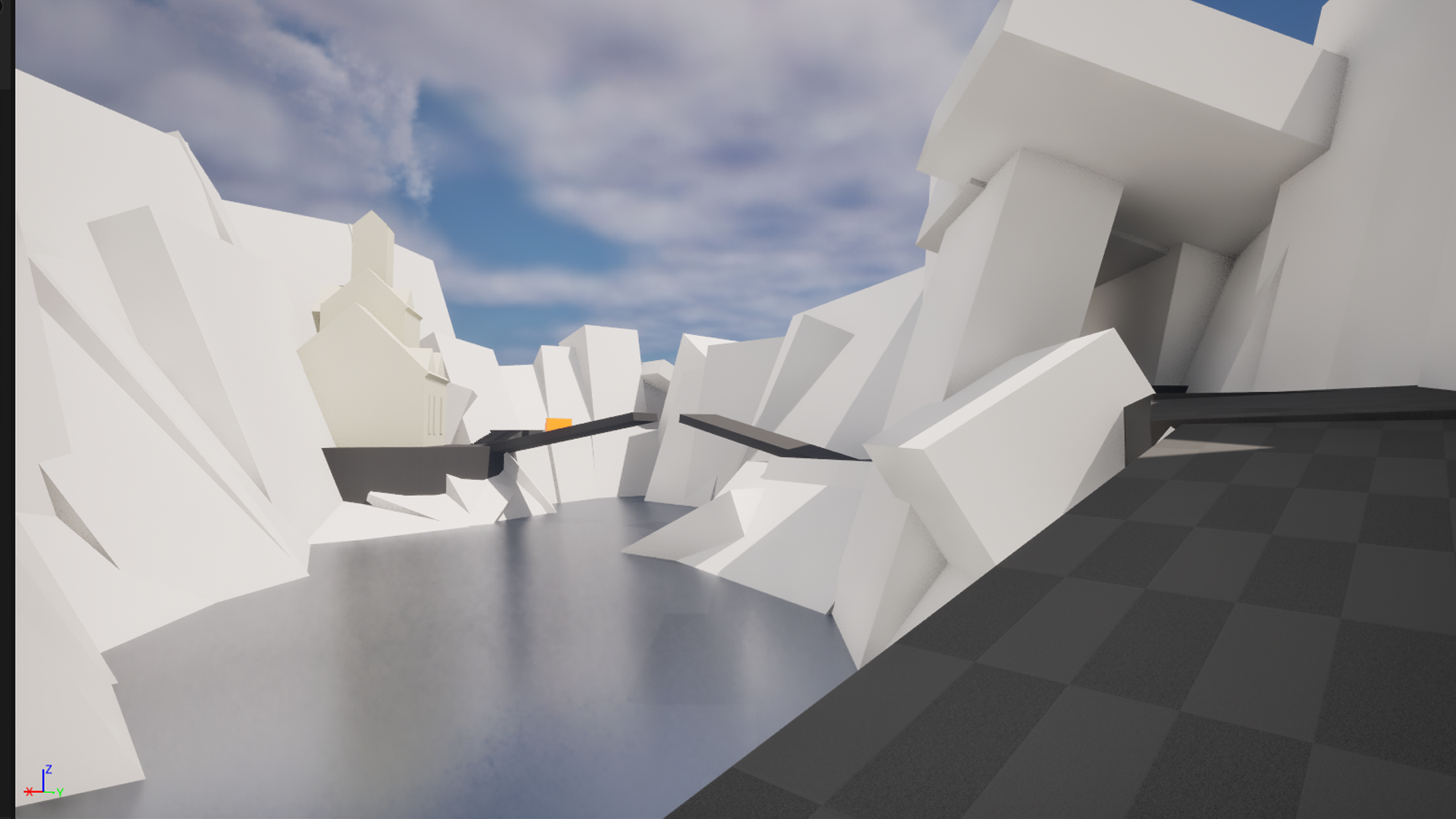
A fast-paced traversal experience where movement, flow and spatial awareness define the player journey.
Role: Solo Level Designer Engine: Unreal Engine Focus: Player flow, traversal design, spatial pacing
Overview
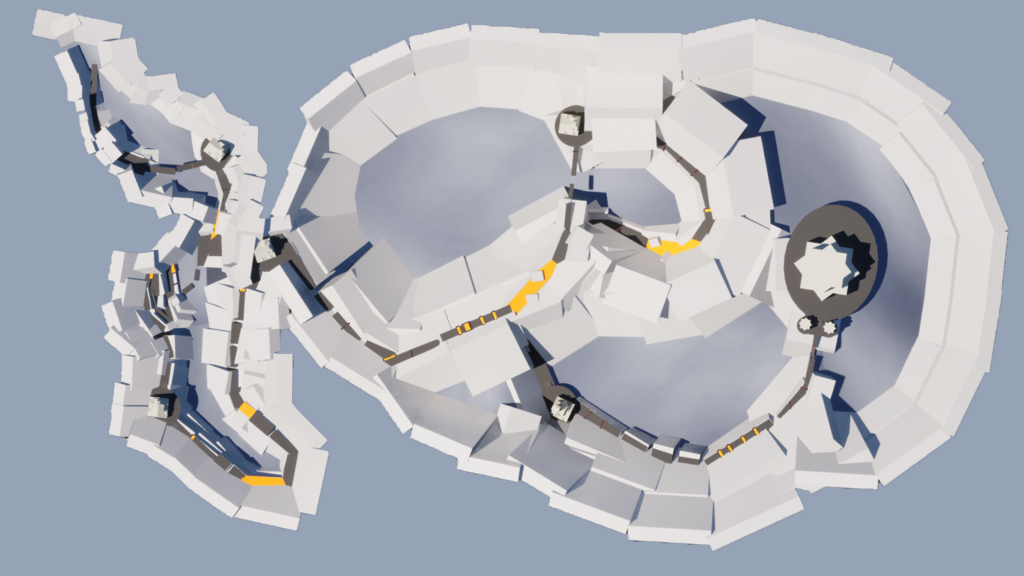
This project is a parkour-focused level designed around fast movement and fluid traversal.
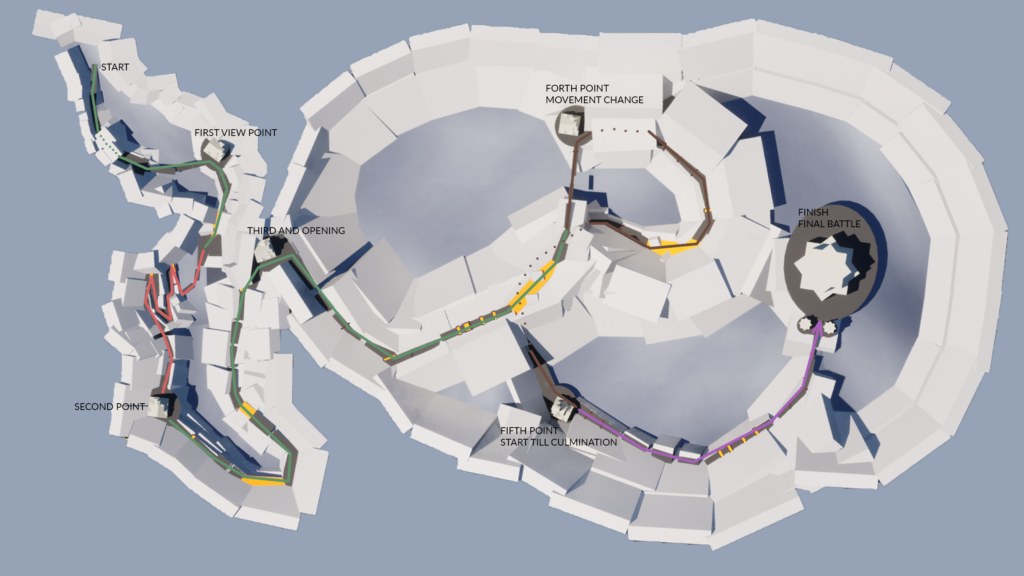
The player navigates through a series of obstacles, using environmental cues and viewpoints to maintain direction, with the goal of reaching a central temple where the final encounter takes place.
My Role
– Designed the full level layout – Created traversal routes and obstacle sequences – Defined player flow and pacing – Designed viewpoint system for navigation guidance – Balanced movement challenges and exploration spaces
Design Goals
– Create a smooth and intuitive parkour flow – Guide the player without relying on UI markers – Combine fast traversal with moments of exploration – Build up toward a clear final objective
Traversal Design
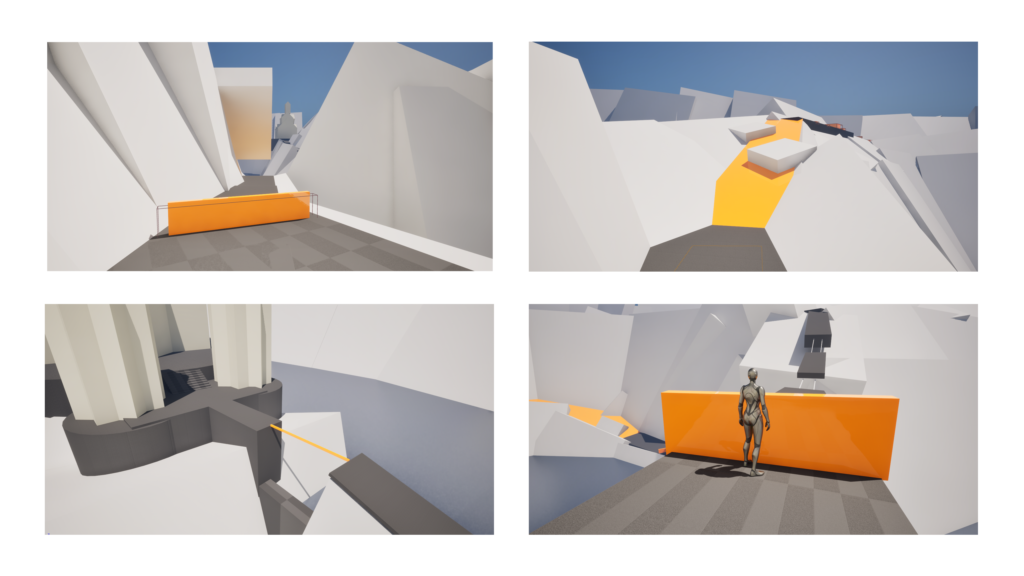
The level is built around continuous movement, encouraging the player to maintain momentum.
– Obstacles are designed to create rhythm and flow – Movement alternates between fast traversal and controlled jumps – Routes support fluid transitions between different mechanics
The design focuses on maintaining player speed while ensuring clarity of direction.
Player Guidance
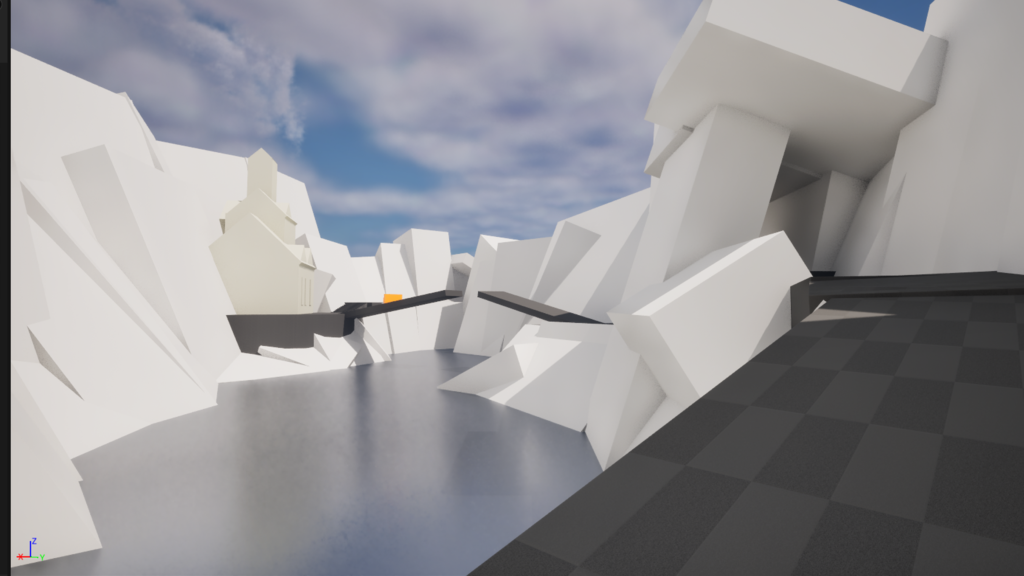
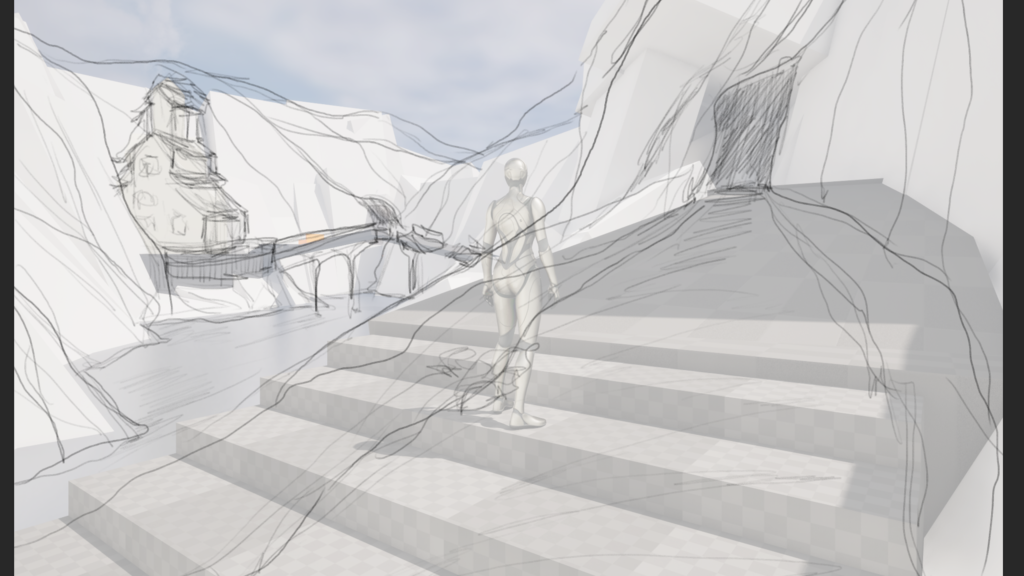
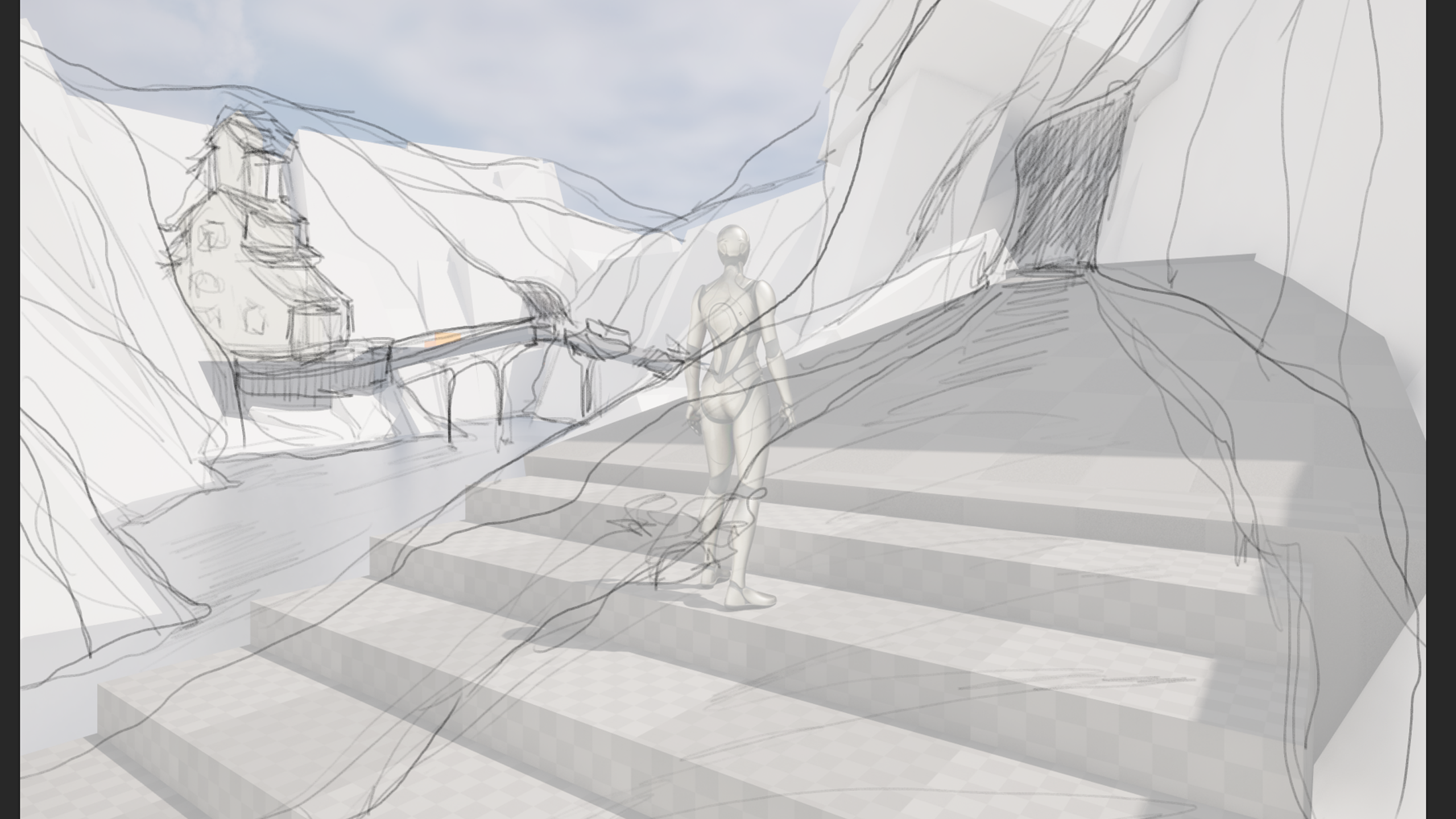
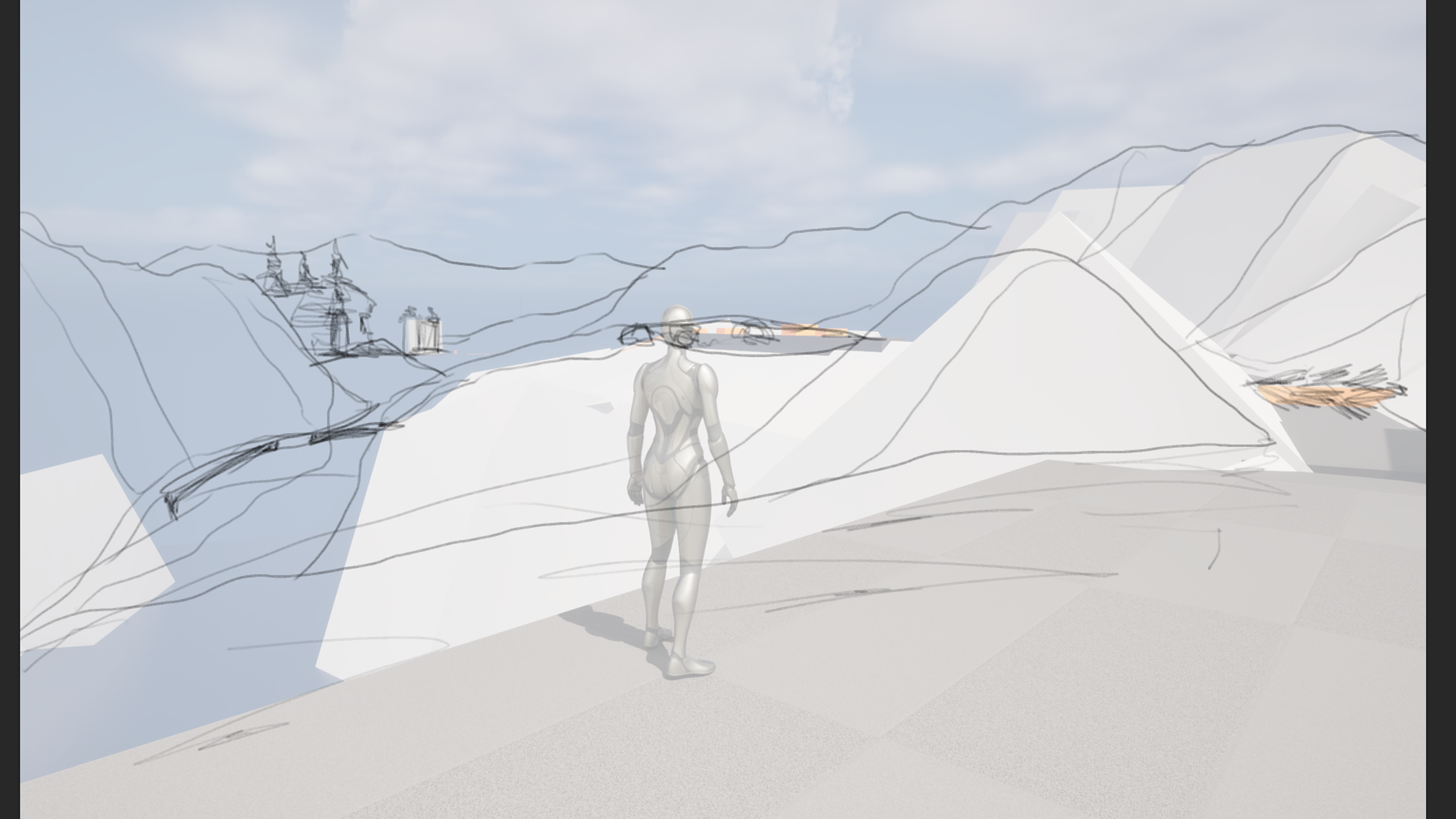
Navigation is supported through environmental design rather than explicit UI.
– Viewpoints act as orientation points, helping the player understand where to go next – Openings and framing guide player movement forward – Landmarks, including the temple, provide a clear long-term objective
This approach allows the player to move quickly while staying oriented.
Level Flow
The level is structured as a sequence of connected traversal sections:
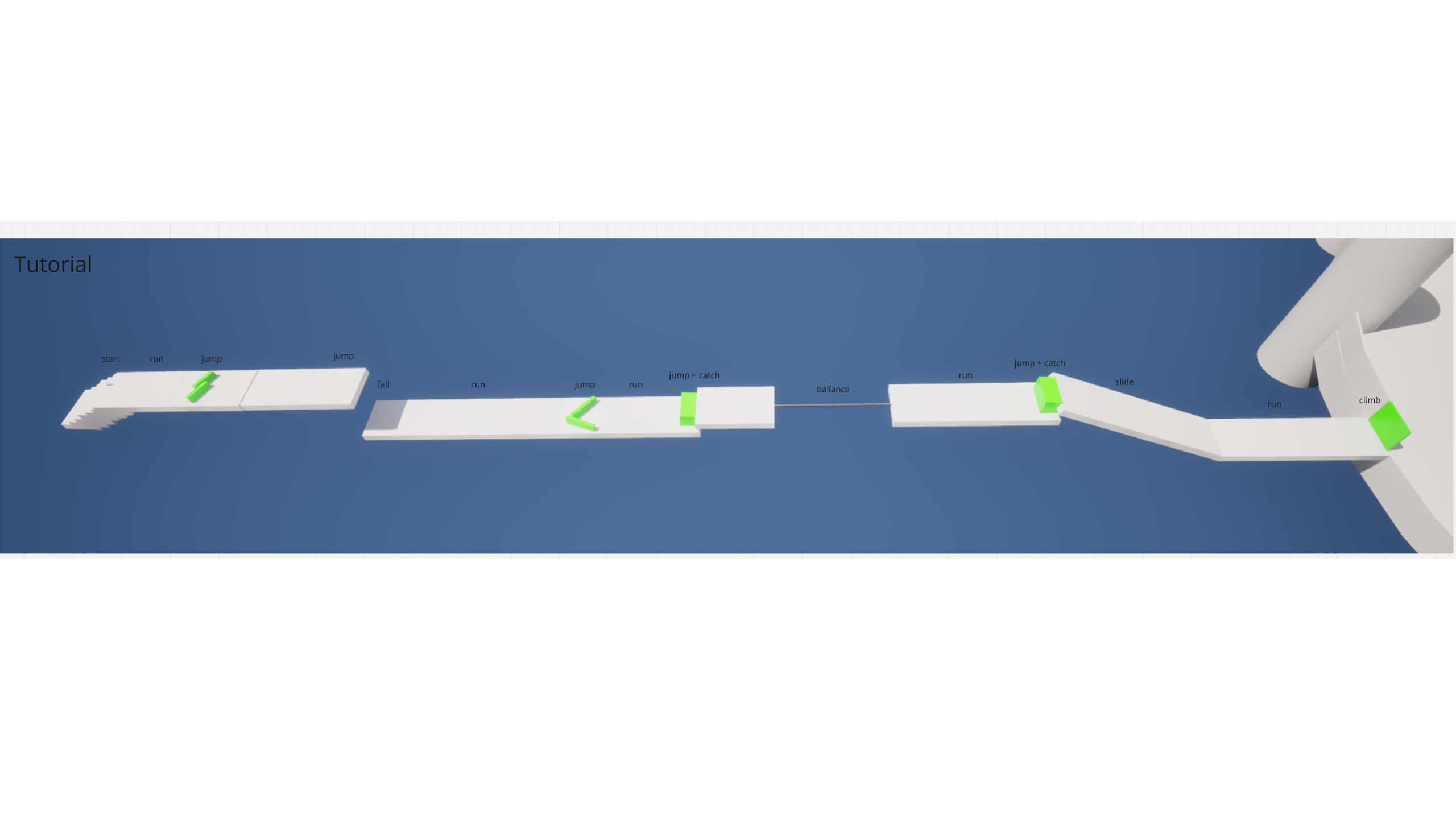
– Entry → introduction to movement and initial obstacles – Mid-section → increasing complexity and verticality – Exploration points → optional spaces offering slower pacing – Final approach → guided path toward the temple – Climax → final encounter at the main objective
This structure creates a balance between intensity and pacing.
Spatial Design
The layout uses elevation changes and varied space types to support gameplay:
– Narrow paths increase precision and tension – Open areas provide relief and spatial awareness – Vertical transitions add depth and challenge
The environment is designed to maintain readability at high player speed.
Iteration & Design Process
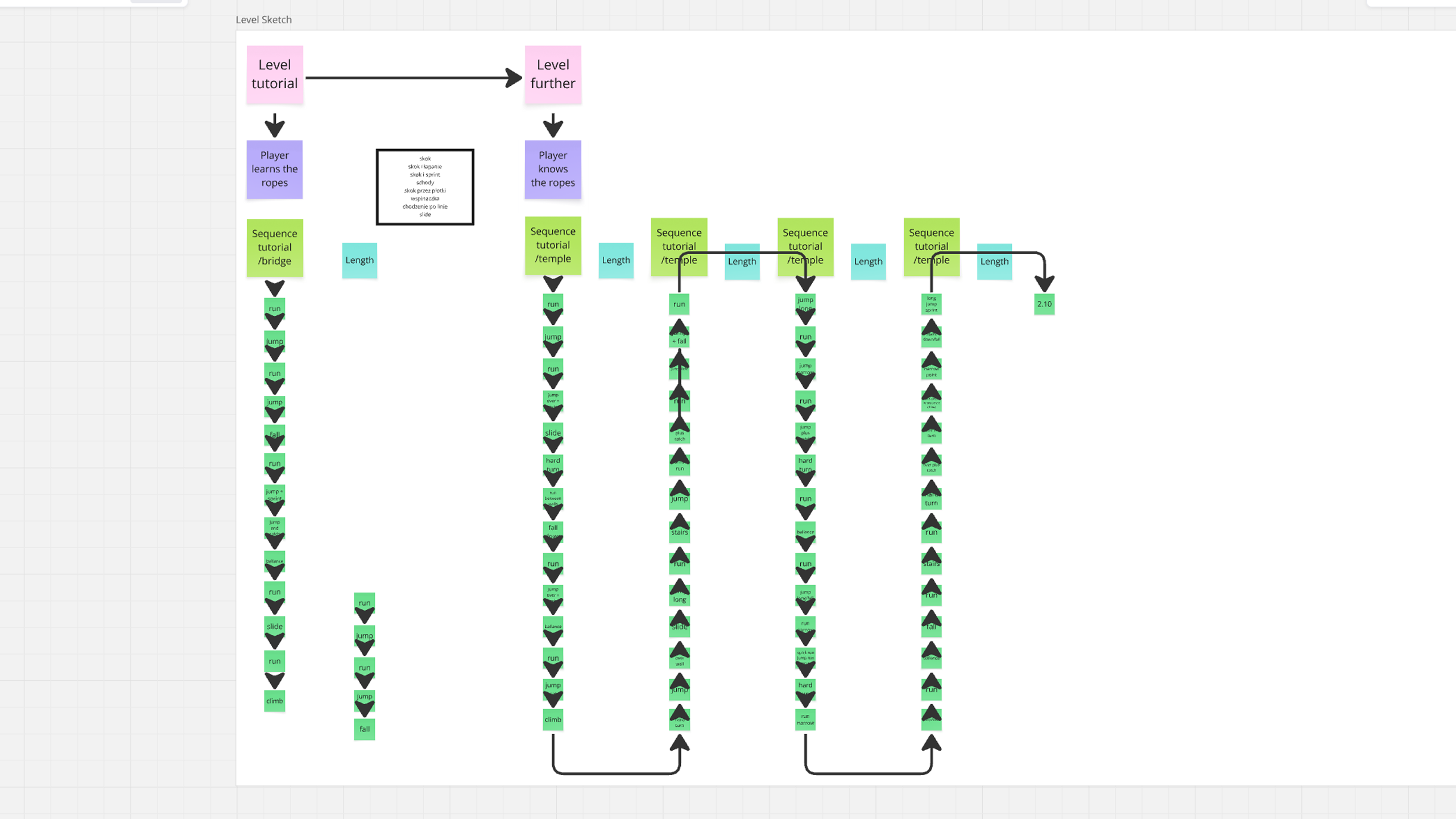
The level design process started by mapping out the full sequence of player actions.
Each movement — jumps, climbs, turns and transitions — was planned step by step to ensure a smooth and continuous traversal experience.
This approach helped define the core flow before building the physical layout.
The level went through multiple iterations focused on improving flow, readability and pacing:
– Early versions tested basic movement sequences and spacing between obstacles – Later iterations refined timing, jump distances and player rhythm – Viewpoints and landmarks were adjusted to improve navigation at high speed – Layout was simplified where needed to reduce player confusion
Each iteration aimed to maintain momentum while improving clarity and player control.
Process
– Defined player movement sequence step by step before building the level – Created initial layout based on traversal flow – Iterated on obstacle placement, timing and pacing – Refined navigation using viewpoints and environmental cues – Balanced difficulty to support smooth and readable movement
Key Takeaways
– Clear guidance is essential in fast-paced traversal levels – Rhythm and pacing define player experience in parkour design – Viewpoints are effective tools for navigation without UI